

Introduction
Morocco is much more than a destination for deserts, mountains and historic cities. It is also one of the most interesting birdwatching destinations in North Africa.
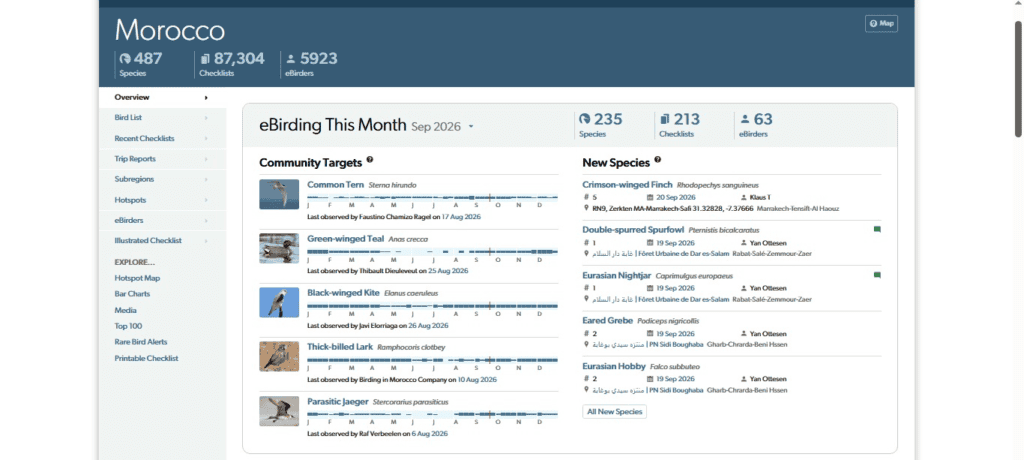
For a birder, Morocco offers something unusual: within one country you can move from Atlantic wetlands and coastal cliffs to cedar forests, High Atlas valleys, rocky mountain passes, dry plains and the edge of the Sahara.
This variety means that birding in Morocco can be very different depending on where you go and when you visit.
You may come to Morocco looking for Moussier’s Redstart, Levaillant’s Woodpecker, Northern Bald Ibis, Crimson-winged Finch, desert larks or migratory birds—and each target may take you to a completely different landscape.
Morocco is also positioned between Europe and Africa, making migration an important part of its birdlife.
So, before planning your first Morocco birding trip, there are a few things worth knowing.
Why Is Morocco Good for Birdwatching?
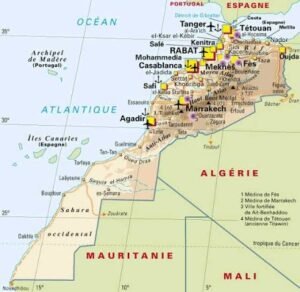
The first thing to understand about birdwatching in Morocco is its geographical diversity.
The country includes:
-
- Atlantic and Mediterranean coasts
-
- Wetlands and lagoons
-
- Agricultural plains
-
- Mediterranean forests
-
- Middle Atlas forests
-
- High Atlas mountains
-
- Rocky valleys and gorges
-
- Semi-desert landscapes
-
- Oases
-
- Sahara habitats
This means that a birding itinerary does not have to focus on one type of habitat.
A well-planned Morocco birding tour can combine mountain birds, migrants, raptors, coastal birds, wetland species and desert specialists.
That is one of the main reasons birders return to Morocco.
When Is the Best Time for Birding in Morocco?
There is no single answer to the question “When is the best time to go birding in Morocco?”
It depends on what you want to see.
Spring Birdwatching in Morocco
March to May is particularly interesting for many birders.
Resident birds are active, many species are breeding, and spring migration brings additional species through the country. Morocco’s location between Europe and Africa makes migration an important feature of its birding calendar.
Spring is therefore a particularly attractive period for a Morocco birdwatching holiday.
Autumn Migration
Autumn migration provides another excellent period for birdwatching.
Migrating birds move south toward Africa, and coastal wetlands, valleys and other suitable habitats can become particularly interesting.
Winter Birding
Winter is especially interesting for wetland and coastal birding.
Sites such as lagoons and estuaries can hold large numbers of wintering waterbirds and migrants.
Summer Birding
Summer can be hot in much of Morocco, but this does not mean birding stops.
Instead, the High Atlas Mountains become particularly attractive.
Higher elevations provide cooler conditions and access to mountain habitats, including areas around Oukaimeden.
Where Are the Best Places for Birdwatching in Morocco?
There is no single “best birding site in Morocco.”
The best location depends on your target species and the season.
1. High Atlas Mountains
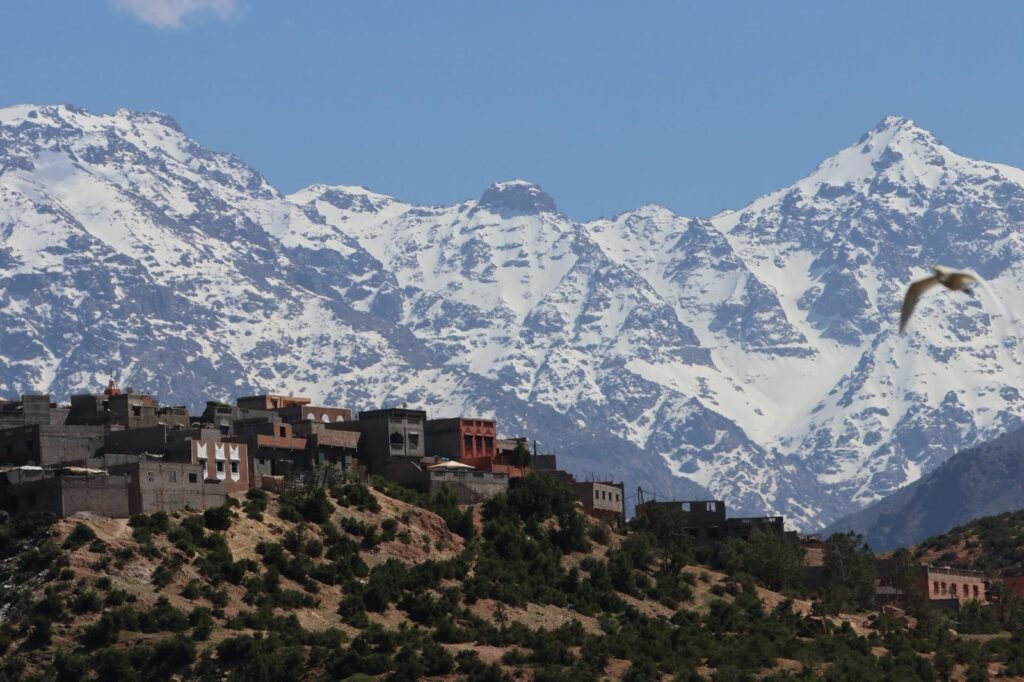
For visitors staying in Marrakech, the High Atlas is one of the easiest ways to experience mountain birding.
Areas around Asni, Imlil, Ait Mizan and Oukaimeden offer rocky slopes, valleys, streams, orchards and higher-altitude habitats.
Target species can include Moussier’s Redstart, Blue Rock Thrush, Rock Sparrow, Levaillant’s Woodpecker and other mountain species.
Oukaimeden is particularly interesting for high-altitude birding.
This is also where Atlas Birdwatching has a natural advantage: rather than presenting the High Atlas as just another stop on a Morocco tour, the focus can be on local birding, walking routes and habitat knowledge.
2. Souss-Massa and the Atlantic Coast
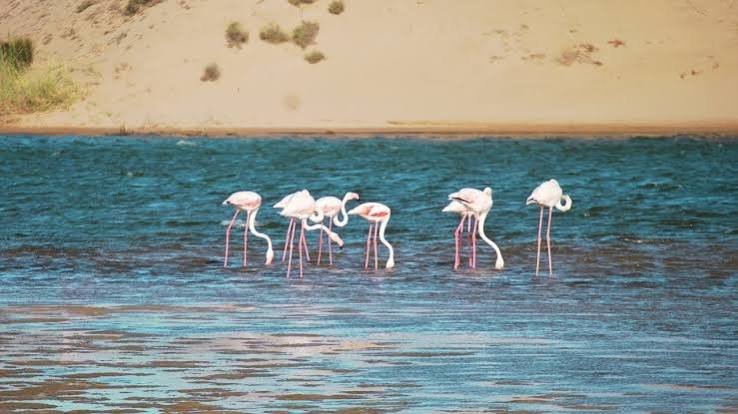
The Souss-Massa region is one of the country’s major birding areas, especially for coastal and wetland species.
The region is particularly associated with the Northern Bald Ibis, while estuaries and coastal habitats support many other birds.
3. Merja Zerga
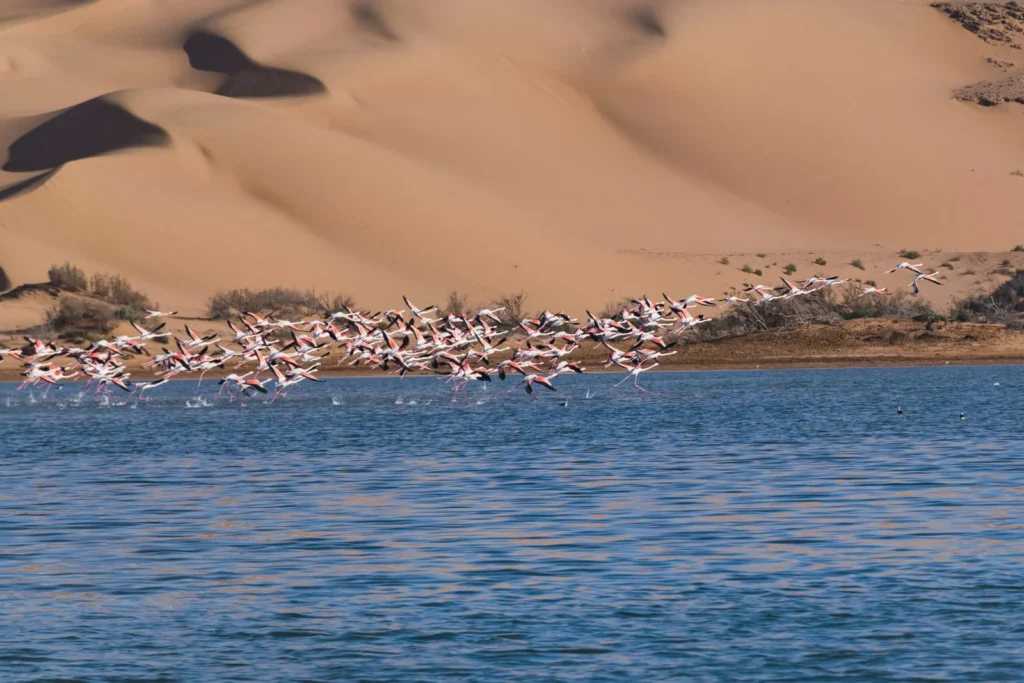
For wetland birdwatching in Morocco, Merja Zerga is an important site on the Atlantic coast.
It can be particularly productive for waders, waterbirds, gulls, terns and wintering migrants.
4. Middle Atlas
The forests around Ifrane and Azrou provide a very different birding experience.
Forest species such as Levaillant’s Woodpecker and other woodland birds make the Middle Atlas an important part of a broader Morocco birding itinerary.
5. Sahara and Desert Regions
If you are interested in desert birding in Morocco, the southeast offers completely different habitats.
The Merzouga and Erg Chebbi area and other desert landscapes can be productive for desert-adapted species and larks.
This is one of the reasons a longer Morocco birding itinerary can be so rewarding: the habitat changes dramatically as you travel from the mountains toward the Sahara.
Which Birds Can You See in Morocco?
One of the biggest mistakes a first-time visitor can make is planning a Morocco birding trip around only one or two species.
Morocco has a much wider range of birdlife.
Depending on the region and season, birders may search for:
Mountain Birds
-
- Moussier’s Redstart
-
- Levaillant’s Woodpecker
-
- Blue Rock Thrush
-
- Rock Sparrow
-
- Alpine Accentor
-
- Alpine Chough
-
- Crimson-winged Finch
Coastal and Wetland Birds
-
- Northern Bald Ibis
-
- Greater Flamingo
-
- Spoonbills
-
- Waders
-
- Terns
-
- Gulls
-
- Osprey
-
- Marsh Harrier
Desert Birds
-
- Desert Sparrow
-
- Hoopoe Lark
-
- Thick-billed Lark
-
- Sandgrouse
-
- Desert Warbler
-
- Trumpeter Finch
The exact species you encounter will depend on the region, season, weather and habitat.
Morocco’s Special and Endemic Birds
For many international birders, one of the main attractions of birding in Morocco is the opportunity to see species associated with North Africa.
Some birds become major targets for international visitors, including:
Moussier’s Redstart
One of the most distinctive birds of Morocco and a major target for birders visiting the Atlas and other suitable habitats.
Levaillant’s Woodpecker
A highly sought-after North African woodpecker associated with suitable forest and woodland habitats.
Northern Bald Ibis
One of Morocco’s most important conservation birds and a major reason birders visit the Atlantic coast.
This is why a Morocco birding checklist can become very different from a European birding list.
Birding in Morocco from Marrakech
If you are staying in Marrakech, you do not necessarily need a two-week expedition to experience Moroccan birding.
The city is an excellent starting point for exploring the nearby High Atlas Mountains.
A day trip can take you from Marrakech towards Asni, Ait Mizan or Oukaimeden, depending on the season and your target species.
For visitors with limited time, this makes birdwatching near Marrakech particularly practical.
Our 1-Day Birdwatching Tour from Marrakech to Ait Mizan is designed for exactly this type of experience: leaving Marrakech, entering the High Atlas and spending the day focused on birds and mountain habitats.
Do You Need a Birding Guide in Morocco?
You can certainly explore Morocco independently.
However, a local birding guide in Morocco can be particularly useful if your main objective is to find specific species.
Birding is not simply about knowing where a location is.
It is also about knowing:
-
- Which habitat to search
-
- Where birds normally feed
-
- Which calls to listen for
-
- When to arrive
-
- Which trails are productive
-
- How weather affects bird activity
-
- When it is better to change locations
A local guide can also adapt the day rather than following a fixed sightseeing itinerary.
This is particularly important in mountain areas where conditions can change quickly.
Birding vs Sightseeing in Morocco
A normal sightseeing tour and a birding tour are not the same thing.
A sightseeing itinerary may try to visit as many places as possible.
A birding itinerary often does the opposite.
You may spend an hour in one small valley because birds are active there.
You may stop beside a field because you hear a call.
You may start before sunrise.
You may walk slowly rather than drive quickly from one attraction to another.
This is what makes a dedicated Morocco birdwatching tour different.
What Should You Bring for Birding in Morocco?
You do not need expensive equipment to start birdwatching.
Essential birding equipment
-
- Binoculars
-
- Comfortable walking shoes
-
- Water bottle
-
- Sun protection
-
- Hat
-
- Field guide or bird identification app
-
- Camera if you enjoy photography
For the mountains, also bring:
-
- Warm layers
-
- Waterproof jacket
-
- Comfortable hiking shoes
The weather can be very different between Marrakech and the High Atlas on the same day.
Bird Photography in Morocco
Morocco is also interesting for bird photography.
The combination of open landscapes, mountain backgrounds, rocky habitats, wetlands and desert scenery can produce photographs that look very different from typical European birding images.
However, photography should always come second to responsible birdwatching.
Avoid disturbing nesting birds, getting too close to wildlife or repeatedly using playback to attract birds.
The objective should be to observe birds without changing their natural behaviour.
Responsible Birdwatching in Morocco
A good birding trip should also respect the places and people you visit.
When birding in Morocco:
-
- Respect private property.
-
- Ask before entering agricultural land.
-
- Avoid disturbing nests.
-
- Keep a reasonable distance from birds.
-
- Do not leave rubbish behind.
-
- Respect local communities.
-
- Avoid excessive playback.
-
- Follow local access rules.
The best birding experience is one where the birds, landscape and local communities are all respected.
How Many Days Do You Need for a Morocco Birding Trip?
This depends completely on your goals.
1 Day
Ideal if you are staying in Marrakech and want to explore the High Atlas.
3–5 Days
Enough to combine different habitats and explore more than one region.
7–10 Days
A good option for birders who want to combine mountains, wetlands, forests and desert landscapes.
10+ Days
For serious birders targeting a wide range of Moroccan species, a longer route can connect several major birding regions.
There are already multi-region itineraries combining the High Atlas, Middle Atlas, Sahara and Atlantic coast, demonstrating how different Moroccan habitats can be combined in one trip.
Why Choose a Local Morocco Birding Experience?
For me, birdwatching is not simply about collecting species.
It is about walking through a landscape, listening to birds, understanding their habitat and discovering places that most visitors never notice.
This is particularly true in the High Atlas.
A mountain valley can look quiet at first.
Then you hear a call.
You stop.
You look carefully.
And suddenly the landscape becomes full of birds.
That is the experience I want to share with people who come birding in Morocco.
Final Thoughts: Planning Your Birding Trip to Morocco
Before you book your Morocco birding trip, think first about what you want from the experience.
Are you looking for:
-
- Moroccan endemic and North African birds?
-
- Mountain birds?
-
- Migratory birds?
-
- Wetland species?
-
- Desert specialists?
-
- Bird photography?
-
- A relaxed private birding experience?
-
- A short birding trip from Marrakech?
-
- A longer Morocco birdwatching tour?
Once you know your priorities, choosing the right region and season becomes much easier.
Morocco offers an extraordinary range of habitats within one country—from the High Atlas Mountains and cedar forests to Atlantic wetlands and the Sahara.
And for visitors staying in Marrakech, the mountains are right at the beginning of the journey.
Bring your binoculars, start early, walk slowly, and give yourself time to look.
You may discover that Morocco is not just a place you visit for the landscape.
It is a place you come to watch birds.
Birding Tours from Marrakech
If you are planning birding in Morocco and want to explore the High Atlas with a local birding guide, these are two options from Marrakech:
1-Day Birdwatching Tour from Marrakech to Ait Mizan
A private full-day birdwatching experience from Marrakech into the High Atlas, exploring the Ait Mizan Valley and surrounding mountain habitats. This is a good option for travelers who have one day available and want to combine birdwatching with beautiful Atlas Mountain landscapes.
1-Day Birdwatching Tour from Marrakech to Ait Mizan
2-Day Birdwatching Tour: Oukaimeden & Ait Mizane Valley
For a deeper birding in Morocco experience, this two-day tour explores the High Atlas around Oukaimeden and the Ait Mizane Valley, giving you more time to search for mountain birds and enjoy different habitats.